The 1st Religious Commandment
The story of “Israelites” escaping from Egypt is an allegory.
Based on biblical tradition, the covenant forming the “People of Israel” the (B’nai Elohim בני אלהים) was made at Mount Sinai about three months after the Exodus. Prior to Moses descending from Mount Sinai, there were no “Jews”. To the contrary, there is archeological evidence that the pyramids were built by paid labourers.
While the Exodus is a foundational story of emerging monotheism, there is no evidence of a mass escape from Egypt.
Historians inform us that Israelites emerged from indigenous Canaanite populations and that the stories of Egyptian slavery were written much later to establish a distinct religious identity.
The Israelites did not easily or immediately escape the cultural influence of Egyptian belief in polytheism. The so called ten plagues as presented are judgments against continued belief in the pantheon of Egyptian deities.
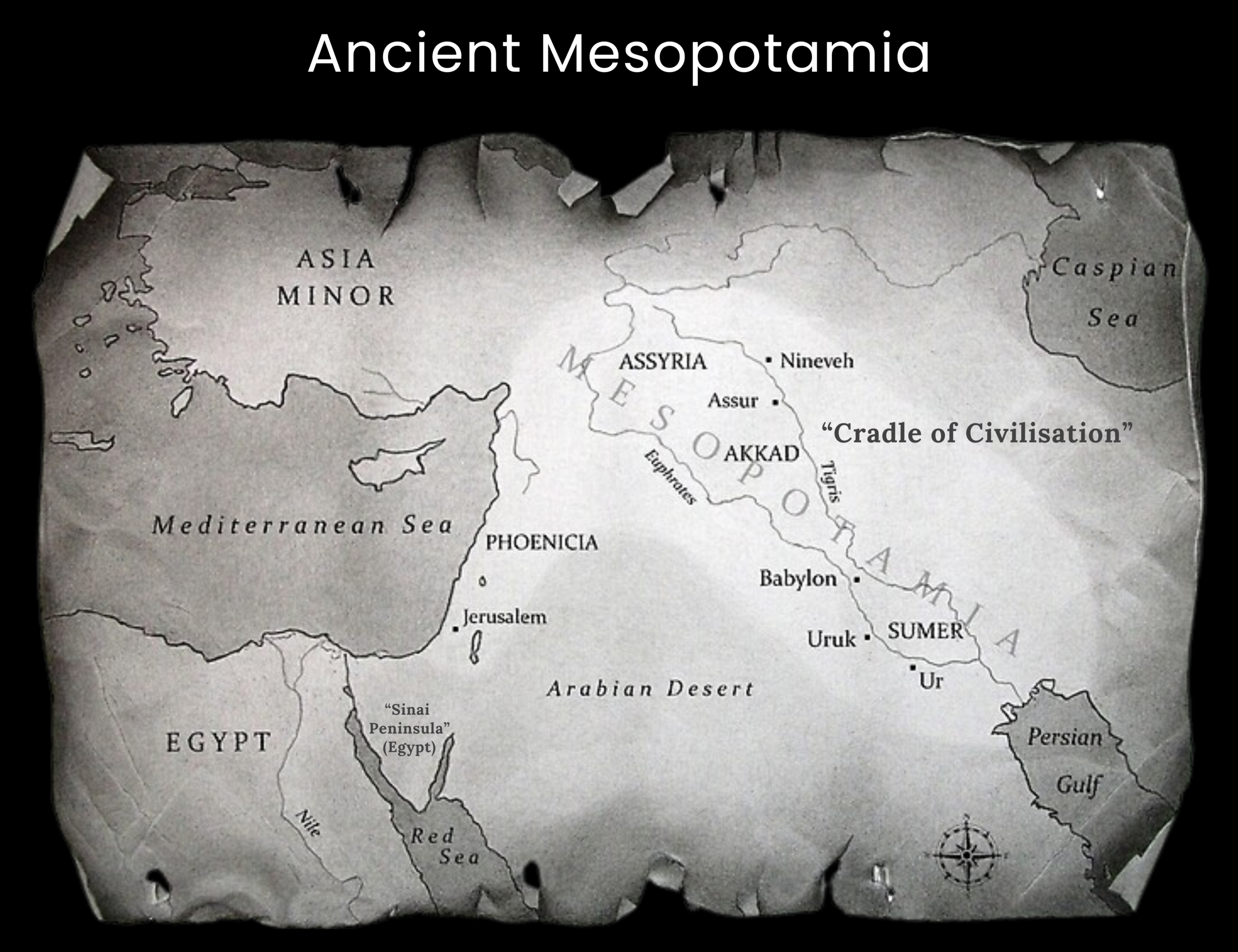
Moses leading the people of the covenant for forty years from the Nile Delta (Egypt) to the Promised Land (Canaan) is extremely unlikely. The distance is relatively short—a few hundred miles. It would take about two weeks to traverse on foot, or a few months with a large, slow-moving caravan. It is much more likely that the 40-year journey was to wait for older people to die off, so that young people free of polytheism would enter Canaan, the future land of Israel.
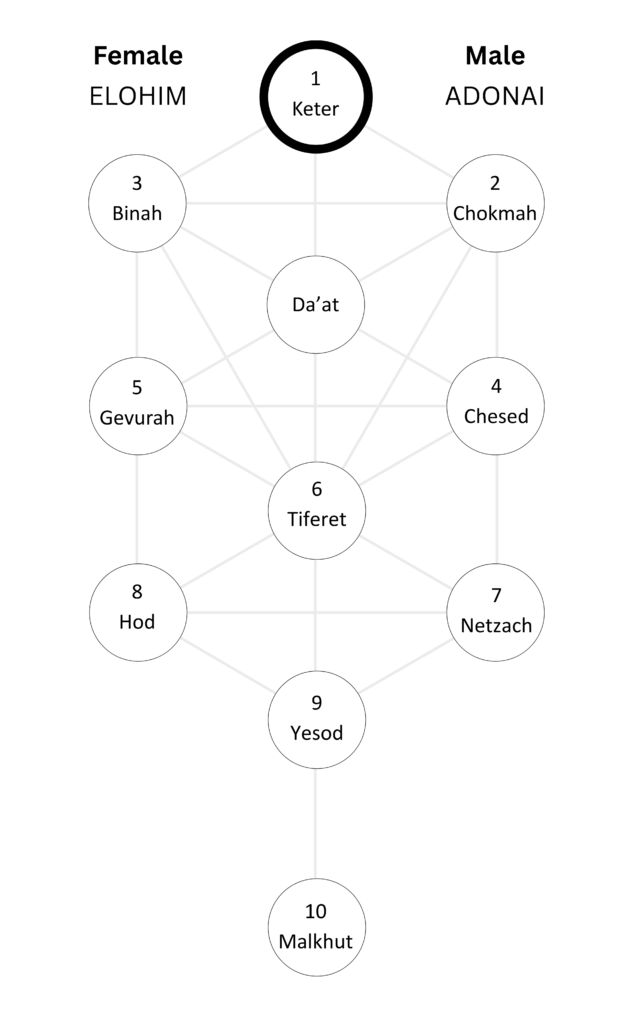
The Tree of Life
עץ חיים
Pesach
פסח
Pesach is a seven-day Jewish celebration of the Exodus from Egypt.
Pesach begins on the 15th day of the Hebrew month of Nisan. Because the Hebrew calendar is lunar-based, the exact date on the Gregorian calendar shifts annually, but it generally falls in March or April.
The Pesach plate:
Food items on the Pesach plate
6
The plate itself
1
There should be three matzoth מצות
3
Total
10
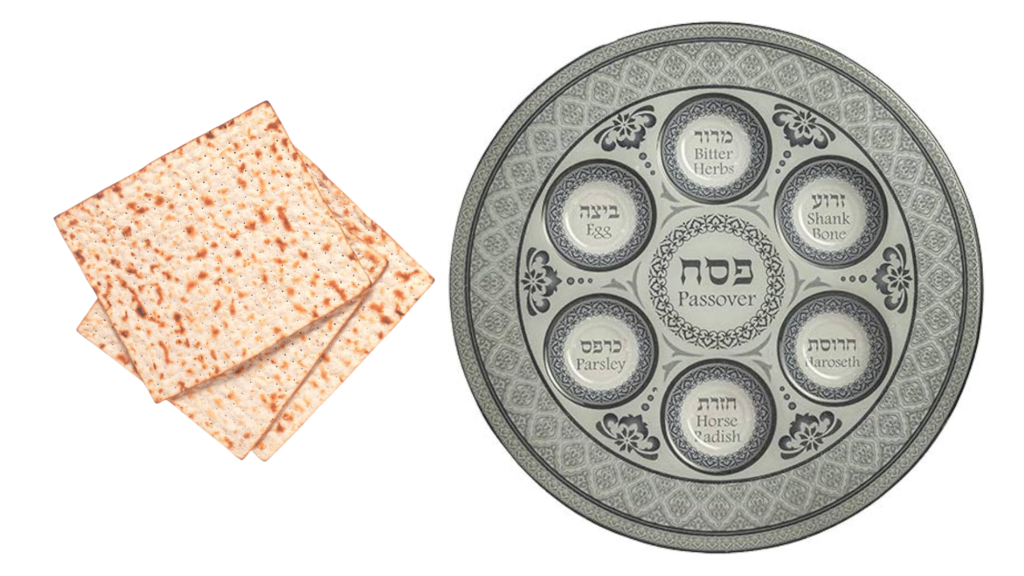
These 10 items represent the 10 Sefirot. The plate is Malkut מלכות, the Kingdom of Earth. The six foods plus the plate represent the seven lower sephirot of emotions and physicality.
The three matzoth represent the three upper Sefirot of the intellect – Chokmah חכמה, Binah בינה and Da’at דעת.
The Matzoth
Matzo represents the left and right columns of the tree. Matzo is on the one hand a “poor man’s bread” and on the other hand a symbol of “freedom from enslavement”. It seems we are being told that there is no poverty in freedom. Put another way, freedom is wealth.
Chometz, bread, rises like the ego. Matzo does not rise and represents the essence of who we are. It is a bread of faith and healing. When we eat Matzo, we leave behind the ego and elevate ourselves to another level of faith and intellect. We eat Matzo for eight days to actualise the energy of healing and to free ourselves from the limitations of the ego.
The Exodus
The exodus from Egypt is an exodus from a belief and behaviour model of the universe that was no longer appropriate at that time. There was no physical escape from slavery in Egypt in the sense of a dash for freedom across the desert. Enslavement was not enslavement as we understand it.
It was enslavement to a belief system.
The newfound freedom was granted in exchange for a code of behaviour. This code, actually a covenant or contract between Israelites and God, was channelled to Moses 3 months after the escape from enslavement to polytheism and in turn given by Moses to a large number of Israelites at Mount Sinai 40 days after he received it from God. The two tablets represent the 10 energies in the left and the right columns in the tree of life. They are the Ten Commandments. In the World of Kabbalah, we believe that our emotional memories of the slavery model had to be erased before we could be reprogrammed. This seems to be a reasonable explanation as it simply does not take forty years to cross the Sinai Peninsula.
One could make that journey in weeks or months at most.
The new behaviour model for co-creation was recorded in the Torah תורה. It is a multi-layered code that we would continue to unravel on a need-to-know basis over the ensuing thousands of years. The Torah’s directive was and remains to create a radically new social order. The purpose was to initiate and accelerate a process of civilisation. The land of Israel is certainly being challenged at many levels and we definitely have not yet achieved the objective.
Pesach: An energy portal
Energy portals open on Jewish festivals. For example, the energy portal of Rosh Hashanah is forgiveness. The energy portal of Pesach is freedom. Although Jewish festivals appear to focus on the past, they are energy portals that open to provide opportunities to transform one’s future.
“Egypt” in Hebrew means “constraint”, both from without and within. The essence of Pesach is movement from bondage to freedom. During the seventh days of Pesach, one has the opportunity to create one’s own freedom from past constraints.
Pesach is an opportunity to enter the energy of redemption. It is a period in time and space to totally transform oneself. The impact of each person entering the energy of redemption during the seven days of Pesach has a quantum effect that transforms the world.
The role of suffering - all existence is a heart beat
Why did we suffer for four hundred years in Egypt? Abraham was told we would be redeemed anyway! So, what is the role of suffering? We are being taught that there has to be a descent in order for us to ascend.
There has to be a contraction in order for there to be an expansion. The universe, like the heart can only expand after it has contracted. All existence is a heartbeat.
Slavery in Egypt was a precondition for receiving the Torah. We could not proceed to the next phase of life without having passed through the dark night of the soul. The Bal Shem Tov explained that suffering is the process that ‘burns’ and heals us. In suffering we burn aspects of ourselves that attract ‘dark’ energies. Egypt was a place of dark materiality. It represented bondage to materiality. The children of Israel were being burned and healed by the harsh experience of bondage as a process of cleansing and redemption. Thus, the act of suffering is the process of soul healing. One has also to understand that both the Israelites and the Egyptians were being healed of excessive bondage to materiality.
The 10 Plagues
During the Pesach ceremony, it is traditional to place a small drop of wine onto a plate as each plague is recited. Each of the 10 plagues represents the dark side of the Tree of Life. The ritual is intended to cleanse the soul of polytheism.
The parting of the Red Sea
The water parting is an allegory.
When the water parted, emotions, especially fear, were set aside so that we could see the Kingdom of Earth, the Sephira of Malkut מלכות, the Land of Israel.
Allan Price
Chaim Mordechai Ben Gershon