Creation: Adam and Eve
Kabbalistic teachings regarding the age of our universe and the creation of Adam are vindicated by modern scientific discoveries.
Our universe is 15 340 500 000 years old. Stephen Hawkins in modern times and Rabbi Isaac of Akka, a Kabbalist, in the 13th century.
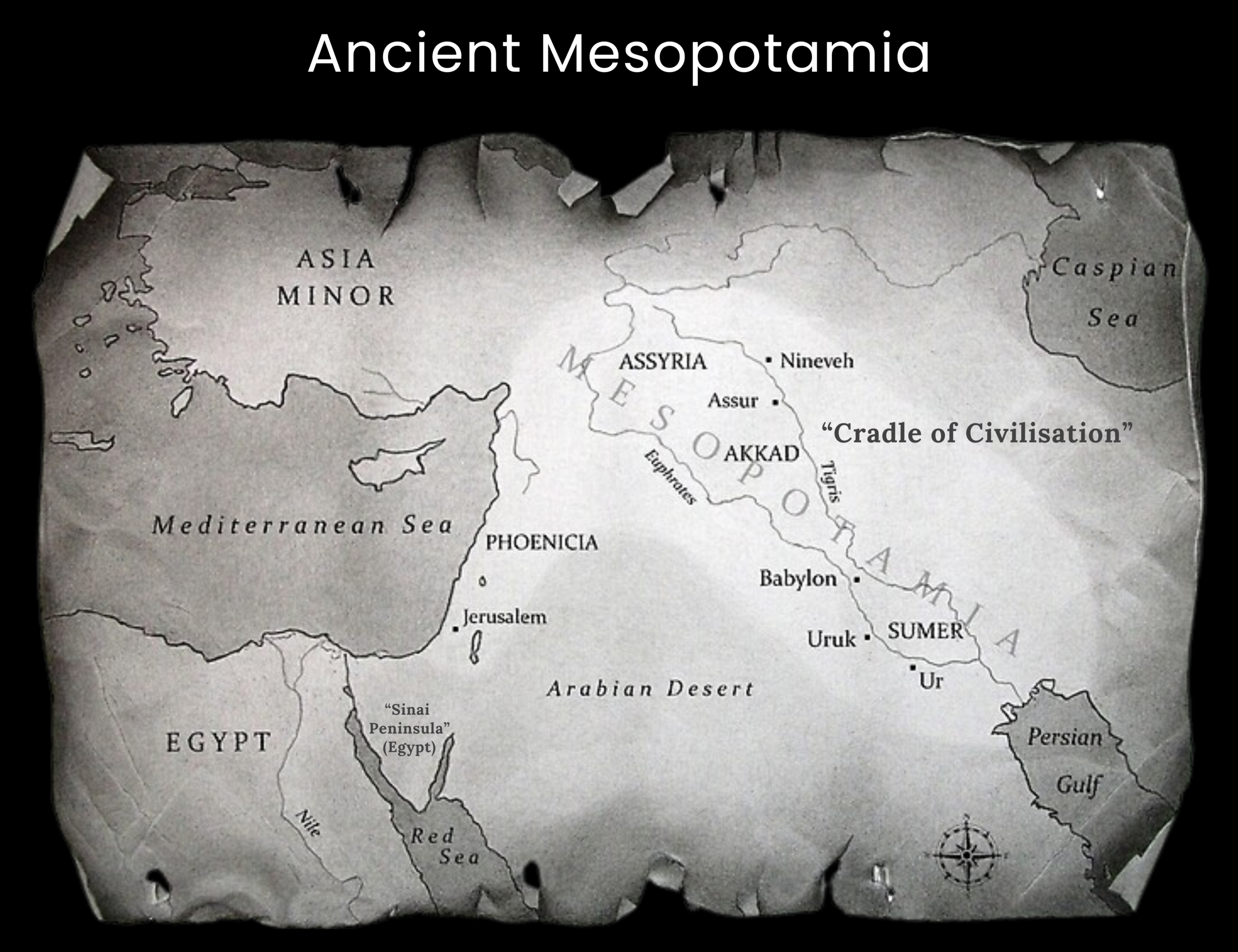
Our world is about 4.5 billion years old. Modern Homo Sapiens emerged about 300 000 years ago.
“The world was 42 000 years old when Adam was created”. Aryeh Kaplan
Man had developed the physical and mental capacities that we possess about 25 000 years ago, prior to the creation of Adam.
There were men on Earth prior to Adam. Adam was created 6000 years ago. There were 974 generations before Adam. In ancient times a generation was much longer than 30 modern years.
Adam was not the first man!
Adam was the first of a new type of man. He was the first man with self-awareness and consciousness of past, present and future.
The Torah states that “The sons of God (Adam and his immediate descendants) saw the daughters of man that they were fair and they took for themselves wives from all whom they chose”
Polytheism
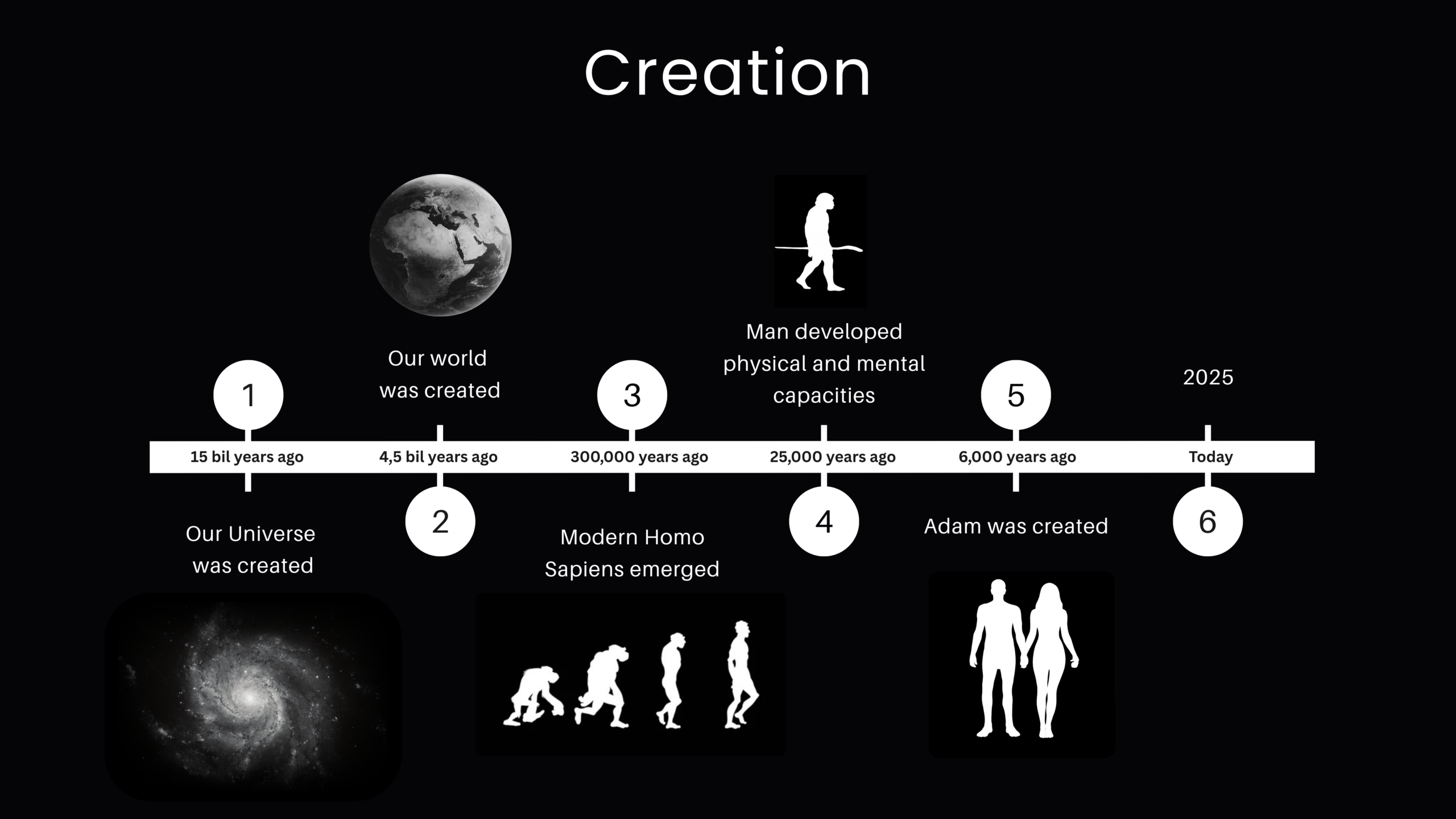
The first complex urban civilisation began in Mesopotamia between the Tigris and Euphrates rivers, about 4,000 BC. This region is known as the “cradle of civilisation” because it saw the earliest emergence of many characteristics of modern society.
While humans developed settled, agricultural lifestyles in other parts of the world, prior to 4,000 BC, Uruk and Ur in Mesopotamia are considered to have been the first fully developed cities.
The Mesopotamian people, the Sumerians, developed advanced irrigation, the wheel, and sophisticated metalworking, which allowed them to produce food surpluses and sustain large populations.
They developed cuneiform the first known script, around 3,000 BC to record transactions, literature, and laws.
Mesopotamian civilisation predates Moses at Mount Sinai by approximately 2,000 years. The Mesopotamians were deeply religious and polytheistic, believing in hundreds of gods and goddesses who controlled natural forces and human destiny.
Polytheism and Monotheism
The fundamental difference between the ancient Sumerians and the Israelites was their theology: Sumerians practiced polytheism, whereas the Israelites believed in one God.
Cuneiform, the written language of the Sumerians, was a complex language comprising hundreds of symbols. It disappeared and was gradually replaced by semitic languages using the 22 letters of the alphabet, the Aleph Beit.
It should be noted that Abraham, the first believer in one God and the receiver of Kabbalah, emerged around 2,000 BC, long after the disappearance of Mesopotamian cities.