Hanukkah
חנוכה
The Festival of Lights
Hanukkah opens on the 25th of Kislev and continues for eight nights and days.
Hanukkah is the only Jewish holiday that starts in one month of the Hebrew calendar (Kislev) and concludes in another.
In the Gregorian calendar, Hanukkah typically falls between late November and late December.
The desecration of the Temple
In the 2nd century BC, we learn from the writings of the historian, Josephus, that the Greeks under Antiochus IV conquered Jerusalem.
It is estimated that massacred more than 50 000 Jewish men woman and children, and sold a further 50 000 into slavery.
Antiochus IV outlawed Jewish religious rites, including Sabbath, circumcision, and the possession of Torah scrolls and he forced Jews to adopt Greek customs.
He converted the Second Temple in Jerusalem into a shrine for the Greek God, Zeus, and sacrificed pigs on the altar.
The Jewish revolt
Chanukah tells the story of a small group of Jewish fighters, led by Mattathias and his son Judah the Maccabee, who defeated the mighty Greek army later in the 2nd century BCE to reclaim the Holy Temple in Jerusalem.
After reclaiming and cleansing the Temple, they found only one small jar of pure oil, enough for one day, yet it miraculously burned for eight days.
Each night of Chanukah is marked by lighting one of the eight candles in the Hanukkah menorah, a nine-branched candelabrum containing spaces for eight ceremonial candles plus one additional candle which is used to light the others.
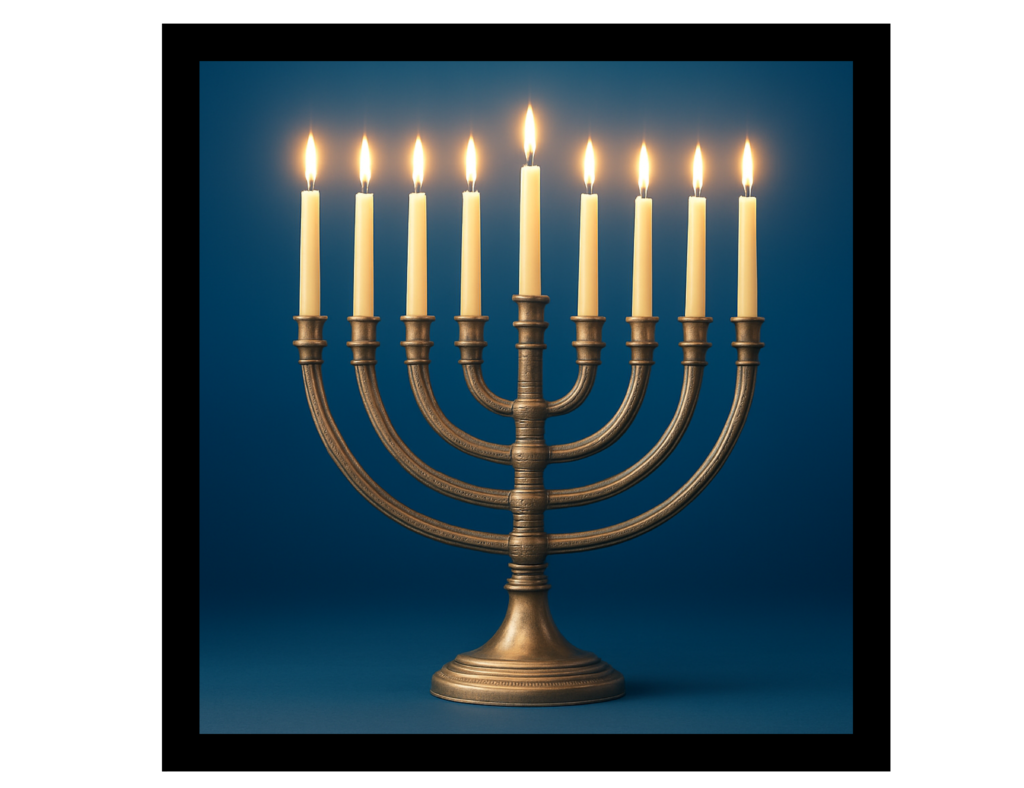
The candle in the center is called the Shamash. The Shamash is used to light one candle on the first night, a second candle on the second night, and so on, until all eight candles are burning together on the final night.
In the Kabbalistic tradition, Hanukkah and the Tree of Life are interconnected. They bring the divine light of the upper 8 spiritual realms, from Chokmah, Binah, Chesed, Gevurah, Tiferet, Netzach, Hod and Yesod into the realm of Malkut.
In the Kabbalistic tradition, the eighth day of Chanuka is viewed as a special time for the sealing of prayers and repentance that began on Rosh Hashanah and Yom Kippur.